5 Expert Ways How to Choose Closed Terrarium Plants
Closed terrarium ecosystems require plant species that flourish under near-saturation humidity and low-to-moderate light conditions. Understanding how to choose closed terrarium plants begins with evaluating adaptations to moisture retention, compact root systems, and slow growth habits. The most successful terrarium specimens share a common ancestry in tropical understory environments where air circulation remains minimal and condensation cycles occur daily. Selecting the wrong species leads to fungal collapse within 14 to 21 days, while appropriate choices establish self-regulating microclimates that require intervention only twice annually.
Materials
Substrate Components and NPK Ratios
Closed terrarium substrates demand low-fertility mixes to control vegetative expansion. Base layers consist of 40% orchid bark (pH 5.5-6.2), 30% long-fiber sphagnum moss (pH 3.5-4.0), 20% horticultural charcoal for cation exchange capacity, and 10% worm castings as a slow-release nitrogen source. Target NPK ratio should approximate 3-1-2 or 4-4-4 organic meal applied at one-quarter strength during the establishment phase only. Avoid synthetic fertilizers exceeding 10-10-10 formulations as nitrogen salts accumulate in sealed environments and cause tip burn within six weeks.
Glass Vessel Selection
Container volume dictates plant maturity potential. A 2-gallon vessel supports three to five specimens with mature canopy spreads under 6 inches. Clear soda-lime glass transmits 90% of photosynthetically active radiation while maintaining structural integrity under condensation weight. Apothecary jars with ground-glass stoppers permit controlled gas exchange every 72 hours during establishment.
Foundational Plant Categories
Ferns require 85-95% relative humidity and include Asplenium nidus (bird's nest fern), Pellaea rotundifolia (button fern), and Pteris cretica (Cretan brake). Mosses such as Leucobryum glaucum (pin cushion moss) and Dicranum scoparium (mood moss) anchor substrate pH below 6.0. Fittonias (Fittonia albivenis) tolerate waterlogged conditions due to aerenchyma tissue in roots. Peperomias including Peperomia prostrata (string of turtles) exhibit CAM photosynthesis variants that reduce transpiration stress.
Timing and Environmental Calibration
Hardiness Considerations
Closed terrariums function as USDA Zone 11 equivalents regardless of external climate. Nighttime temperatures inside sealed vessels rarely drop below 62°F even when ambient conditions reach 40°F. This thermal buffering allows tropical species to maintain metabolic activity year-round. Establishment timing aligns with indoor heating seasons. October through February in northern latitudes provides stable 68-74°F conditions ideal for root colonization by mycorrhizal fungi.
Light Duration
Position vessels 24-36 inches from east-facing windows or provide 12-14 hours of 5000K LED lighting at 400-800 foot-candles. Chlorophyll degradation occurs under direct sun exposure exceeding 2 hours daily. Species such as Hypoestes phyllostachya (polka dot plant) require the upper range while selaginellas tolerate 200-400 foot-candles.
Phases of Development
Phase One: Substrate Inoculation (Days 1-7)
Layer 1.5 inches of drainage aggregate, add activated charcoal at 0.25-inch depth, then spread substrate mix to 2.5-inch depth. Introduce Trichoderma harzianum spores at 1 gram per gallon of substrate to suppress Pythium and Rhizoctonia. Mist substrate to field capacity, defined as the point where water drips when a handful is compressed. Allow 48 hours for microbial colonization before planting.
Pro-Tip: Incorporate 5% by volume of biochar (particle size 2-5mm) to increase cation exchange capacity by 40% and buffer pH fluctuations during decomposition cycles.
Phase Two: Transplanting and Auxin Management (Days 8-14)
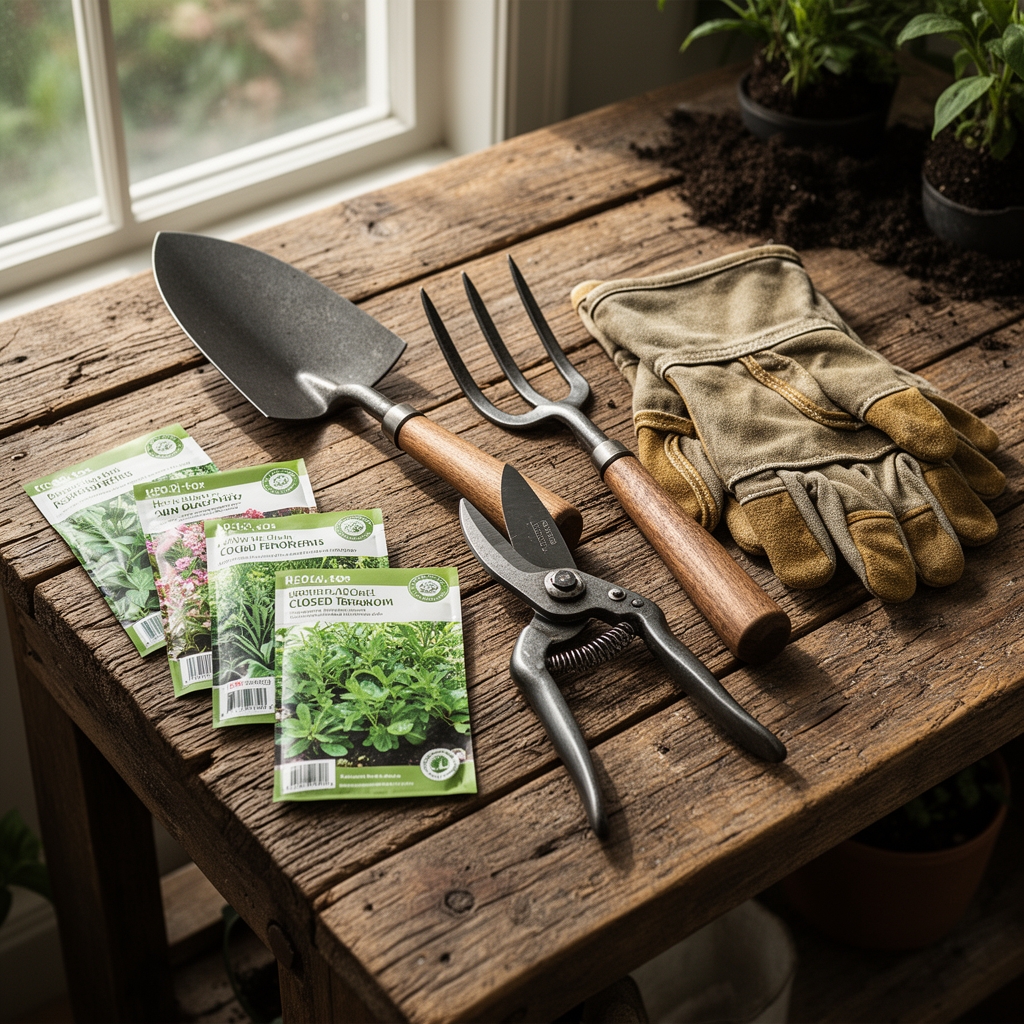
Remove nursery soil from root balls to prevent nutrient leaching. Prune roots at 45-degree angles using sterilized shears to maximize surface area for auxin distribution. Position tallest specimens toward the rear at 60% of total vessel height. Space plants to allow 1-inch lateral growth over six months. Seal vessel and maintain closure for 72 hours to initiate condensation cycling.
Pro-Tip: Apply rooting hormone containing 0.1% indole-3-butyric acid to cut root ends to accelerate adventitious root formation in sealed, low-oxygen environments.
Phase Three: Establishment and Gas Exchange (Days 15-90)
Open vessel every 96 hours for 15 minutes during the first month if condensation obscures more than 80% of glass surface. Excessive water vapor indicates substrate saturation beyond field capacity. Remove condensation manually with sterile cloth. By day 60, properly balanced terrariums self-regulate with condensation covering 40-60% of glass at night, clearing by midday through transpiration and substrate absorption.
Pro-Tip: Monitor new leaf emergence as an indicator of successful establishment. Healthy closed systems produce new growth at 50% the rate of open cultivation.
Troubleshooting
Symptom: Yellow leaf margins progressing to necrotic patches
Solution: Nitrogen toxicity from over-fertilization. Open vessel for 6 hours daily for one week to allow nitrogen volatilization. Reduce misting frequency by 50%.
Symptom: White cottony growth on substrate surface
Solution: Saprophytic fungal bloom from excess organic matter. Mucor and Rhizopus species indicate anaerobic pockets. Increase air exchange to twice weekly. Remove affected substrate to 0.25-inch depth and replace with fresh charcoal layer.
Symptom: Leaf drop without discoloration
Solution: Ethylene accumulation from decaying plant material. Ethylene concentrations above 0.5 ppm trigger abscission. Remove all senescent leaves immediately. Introduce 10 grams of activated charcoal to absorb volatile organic compounds.
Symptom: Algal film on glass interior
Solution: Excess light and nutrient availability. Reduce light duration by 2 hours daily. Algae compete with plants for dissolved CO2. Manually remove with magnetic aquarium scraper every 14 days.
Symptom: Stunted growth with dark green foliage
Solution: Phosphorus deficiency in high-pH substrates. Test substrate pH; if above 6.5, incorporate elemental sulfur at 1 teaspoon per gallon to lower pH by 0.5 units over 30 days.
Maintenance Protocols
Water Management
Established closed terrariums require supplemental water only when substrate surface appears dry to touch, approximately every 90-120 days. Add 2 tablespoons of distilled water per gallon of vessel volume using a pipette to avoid foliar contact. Tap water introduces dissolved solids that accumulate to toxic levels within 18 months.
Pruning Schedule
Trim growth exceeding planned canopy dimensions every 60 days using cuts at 30-degree angles 2mm above leaf nodes. Remove pruned material immediately to prevent decomposition. Species such as Ficus pumila require monthly containment pruning to prevent vessel domination.
Pest Prevention
Quarantine new plants for 21 days before introduction. Springtails (Collembola) and isopods maintain substrate health by consuming decaying matter at populations under 20 individuals per square inch. If fungus gnats (Sciaridae) appear, introduce Steinernema feltiae nematodes at 5 million per gallon of substrate.
Frequently Asked Questions
How often should I open a closed terrarium?
Mature systems require opening once every 3-4 months for 20 minutes to refresh atmospheric gases. Newly established vessels need brief opening weekly for the first month to calibrate humidity.
Can succulents survive in closed terrariums?
No. Succulents require humidity below 50% and excellent drainage. Closed environments maintain 80-95% humidity, causing root rot in xerophytic species within 10-14 days through cellular plasmolysis.
What causes terrarium plants to grow leggy?
Insufficient photosynthetically active radiation forces etiolation. Plants stretch toward light sources, producing elongated internodes and pale foliage. Increase light intensity by 200 foot-candles or reduce distance to light source by 6 inches.
How do I revive a crashed terrarium ecosystem?
Remove all dead material and flush substrate with distilled water equal to twice the substrate volume. Allow drainage for 24 hours, then reintroduce plants and mycorrhizal inoculant. Success rate for revival decreases below 30% once anaerobic conditions persist beyond 14 days.
Which plants grow slowest in closed terrariums?
Selaginella kraussiana grows 0.5 inches monthly. Pilea glauca expands 0.25 inches per month under low light. Fittonia verschaffeltii 'Minima' cultivars maintain 2-inch mature spread. These species require pruning intervention only twice annually.