10 Pro Tips How to Install Garden Arches
Garden arches transform flat beds into three-dimensional growing systems, adding 80 to 120 vertical inches of production space while creating microclimates beneath their canopies. Learning how to install garden arches correctly ensures structural integrity for years of climbing rose, clematis, and bean harvests. Proper installation begins with understanding soil mechanics, material expansion rates, and the physics of wind load on planted structures.
Materials and Soil Preparation
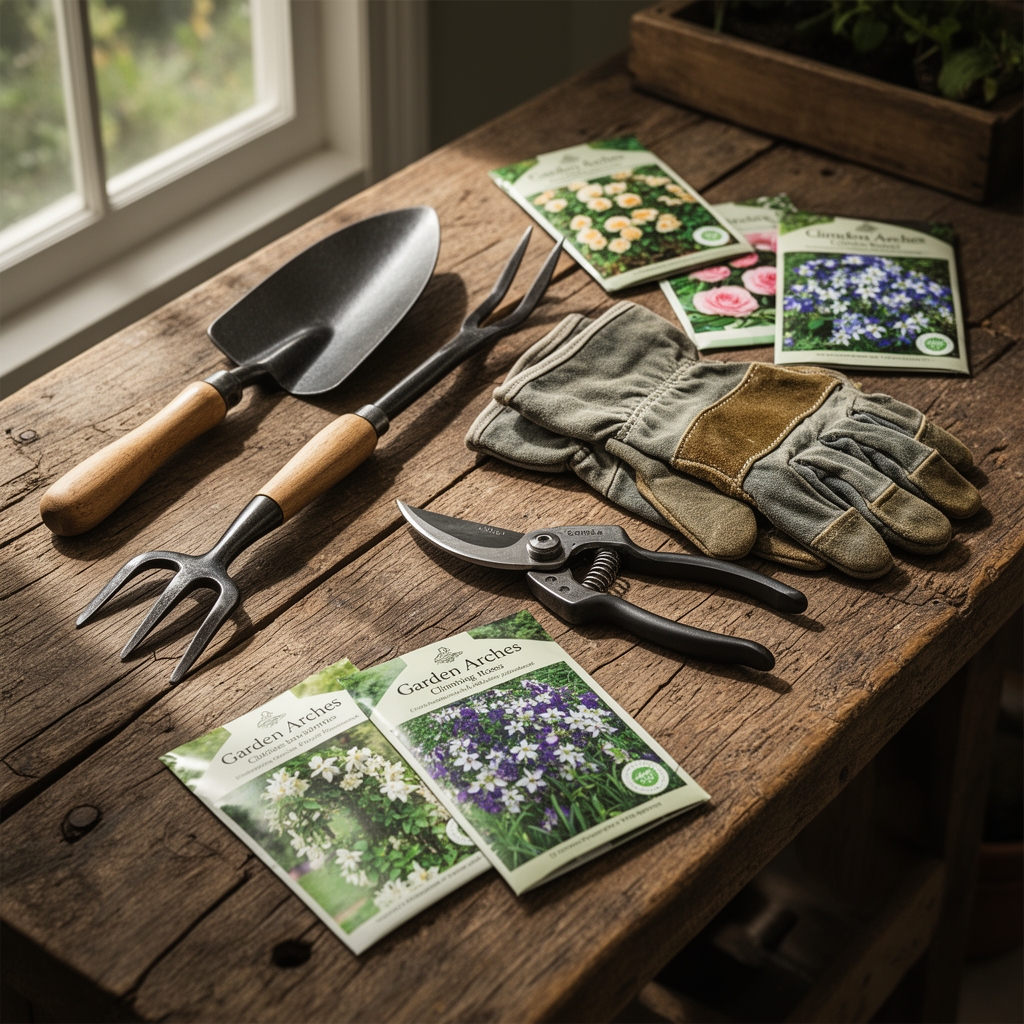
Select arches rated for your climate. Powder-coated steel withstands temperatures from -40°F to 140°F. Cedar and black locust resist decay for 15 to 25 years without treatment. Galvanized steel requires re-coating every 7 years in humid zones.
Amend installation sites to pH 6.2 to 6.8 for optimal anchor stability. Mix 2 cubic feet of compost per post hole to improve cation exchange capacity. Apply a 4-4-4 organic meal at 3 pounds per 10 square feet if establishing perennial climbers. For annual beans or cucurbits, use 5-10-10 granular at 2 pounds per 10 square feet, broadcasting 6 inches beyond the drip line.
Pre-soak wooden posts in copper naphthenate for 48 hours if local codes permit. This extends ground-contact life by 8 to 12 years. Concrete footings require Type-I Portland cement mixed at 1 part cement to 2.5 parts sand to 3 parts aggregate. Allow 72 hours of cure time before mounting arch sections.
Timing and Hardiness Considerations
Install garden arches 4 to 6 weeks before the last spring frost in Zones 3 through 7. This allows concrete to cure and soil to settle before planting climbers. In Zones 8 through 10, autumn installation between October 15 and November 30 prevents heat stress during anchoring work.
Frost heave affects posts set above the local freeze line. Dig holes to 6 inches below maximum frost depth. Consult USDA frost maps: 36 inches for Zone 4, 24 inches for Zone 6, 12 inches for Zone 8. Backfill with 4 inches of gravel at the base to facilitate drainage and reduce freeze-thaw movement.
Schedule metal arch installation when soil moisture sits between field capacity and permanent wilting point. Saturated clay exerts unequal pressure on posts. Bone-dry soil crumbles, leaving voids that later collapse. Test by squeezing soil into a ball. It should hold shape but fracture cleanly when dropped from waist height.
Installation Phases

Sowing the Foundation
Mark post locations with stakes and mason's line. Measure diagonals to confirm square corners. Deviation beyond 1 inch creates racking stress. Drill or dig pilot holes 18 to 24 inches deep for arches under 8 feet tall, 30 to 36 inches for larger structures.
Insert pressure-treated 4×4 posts or steel sleeves. Plumb with a 48-inch level on two adjacent faces. Fill around posts incrementally, tamping every 4 inches with a steel bar. This eliminates air pockets that cause settling.
Pro-Tip: Inoculate post holes with mycorrhizal fungi before planting climbers. Apply 2 tablespoons of endo/ecto blend per cubic foot of backfill. This establishes symbiotic networks that increase phosphorus uptake by 40 percent.
Transplanting the Arch Frame
Bolt or lash horizontal and curved members to posts. Use stainless steel hardware rated for 200 pounds shear strength per joint. Check plumb again after tightening. Structures shift 1 to 3 degrees during final fastening.
Space horizontal cross-members every 12 to 18 inches for annual vines, 24 inches for woody perennials. Closer spacing increases weight but improves auxin distribution in climbing stems, producing denser foliage coverage.
Pro-Tip: Angle the top curve 10 to 15 degrees forward (toward the sun path). This exposes 20 percent more leaf surface area to direct light and reduces wind resistance by 12 percent.
Establishing Plantings
Plant climbers 8 to 10 inches from post centers. Roots grow horizontally before descending. Crowding posts stunts establishment. For roses, prune canes to 18 inches and train at 45-degree angles during the first season. This promotes lateral branching and delays apical dominance.
Water transplants with 2 gallons per plant immediately after installation. Apply 3 inches of shredded bark mulch in a 24-inch diameter ring, keeping material 4 inches from stems to prevent crown rot.
Pro-Tip: Install drip irrigation tubing before mulching. Position emitters 6 inches from each plant, delivering 0.5 gallons per hour. This maintains consistent moisture critical for root establishment over the first 90 days.
Troubleshooting
Symptom: Posts lean 5 to 10 degrees within the first season.
Solution: Excavate one side, add gravel, and re-tamp. Install a diagonal knee brace from post to arch leg, creating a triangulated support.
Symptom: Arch sways during 15 mph winds.
Solution: Anchor with 18-inch ground stakes driven at 45-degree angles through perforated base plates. Add tensioned guy wires from the apex to earth anchors set 6 feet out.
Symptom: Climbing roses develop black spot on lower leaves.
Solution: Prune away foliage below 18 inches. Improve air circulation by thinning interior canes by 30 percent. Apply copper fungicide at 1.5 tablespoons per gallon every 14 days.
Symptom: Bean vines collapse mid-season.
Solution: Excess nitrogen (high N in NPK ratios) produces weak stems. Foliar feed with 0-10-10 liquid at half strength. Tie heavy vines with soft cloth strips every 8 inches.
Maintenance Schedule
Inspect hardware every spring. Tighten bolts to manufacturer torque specifications. Apply 1 inch of water per week during active growth, delivered in two 0.5-inch sessions to promote deep rooting.
Prune woody climbers in late winter, removing dead wood and thinning to 5 to 7 main canes. Cut above outward-facing buds at 45-degree angles. Repaint metal arches every 5 years in coastal zones, 8 years inland.
Side-dress perennials each spring with 1 inch of compost and 2 tablespoons of 5-10-5 fertilizer per plant. Avoid high-nitrogen formulas after July; they delay hardening-off before frost.
Frequently Asked Questions
How deep should posts be set?
Posts must reach 6 inches below the local frost line. Minimum depth is 18 inches in Zone 9, 36 inches in Zone 4.
Can I install an arch over a pathway?
Yes. Maintain 7 feet of clearance at the apex to accommodate visitors and tools. Paths should be 36 inches wide minimum.
What climbers grow fastest on new arches?
Annual scarlet runner beans cover 10 feet in 60 days. Clematis 'Jackmanii' reaches 12 feet by year two. Climbing rose 'New Dawn' establishes in 18 months.
Do arches need footings in sandy soil?
Sandy loam with good drainage requires only tamped gravel. Pure sand needs concrete collars 12 inches in diameter to prevent rotation.
How do I winterize garden arches?
Remove annual vines completely. Untie perennials, lay canes horizontally, and mulch crowns with 6 inches of straw. Check post plumb in early spring and correct any frost heave shifts immediately.