6 Simple Steps to Use Soil Blockers
The scent of moist peat and coir fills the potting room as you press the steel blocker into your seed-starting mix. The tool forms four perfect cubes of soil that stand upright without plastic, without waste. Learning the steps to use soil blockers transforms seed starting from a tray-and-cell routine into precision horticulture. Each block releases roots into the air, triggering natural pruning mechanisms that stop circling and promote fibrous branching.
Materials
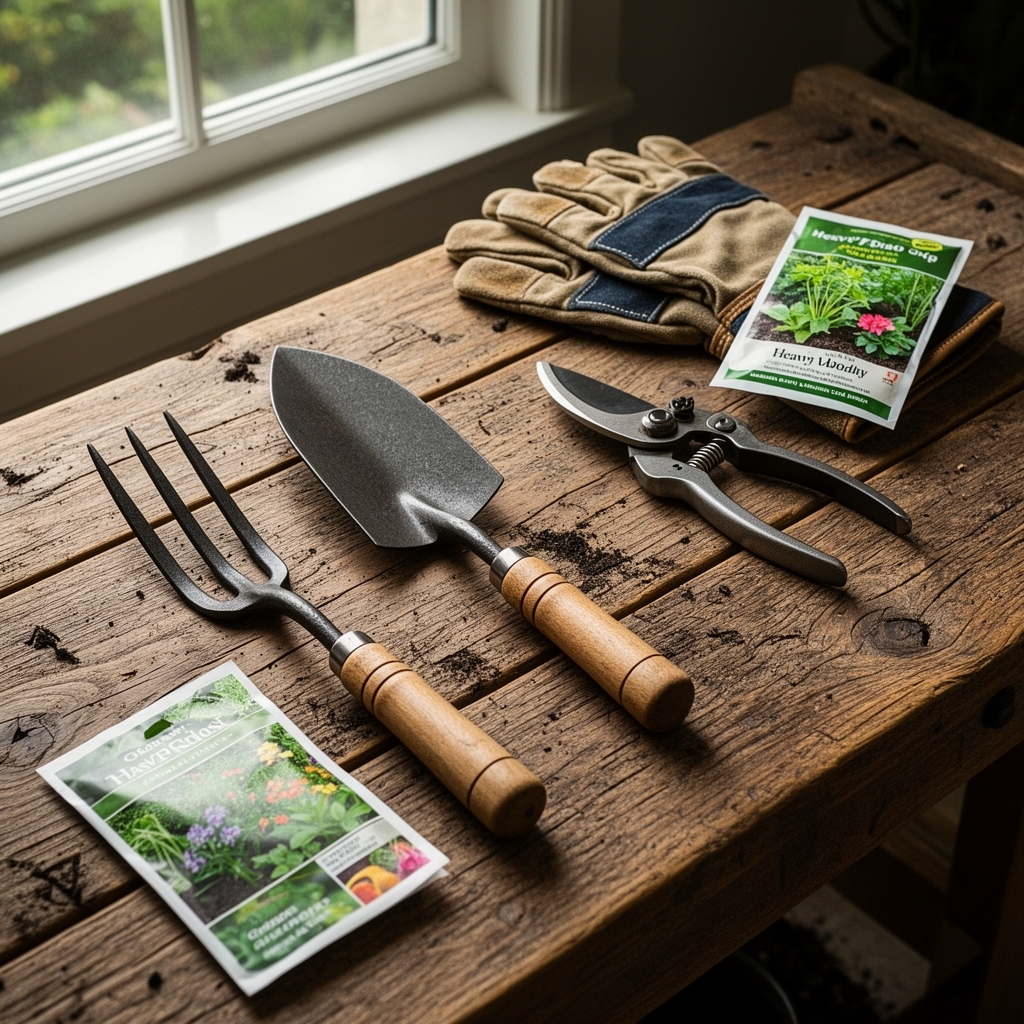
Soil blockers demand a binding medium with high cation exchange capacity. Standard potting mix collapses. The base recipe requires 30 parts sphagnum peat (pH 3.5-4.5) or coir (pH 5.5-6.8), 10 parts coarse perlite, 10 parts mature compost (pH 6.5-7.0), and 1 part colloidal clay as the structural binder. Add organic fertilizer at 4-4-4 or 5-3-3 analysis, 2 cups per cubic foot. Lime adjusts pH to 6.2-6.8 for most vegetable crops.
The blocker itself comes in standard sizes. Mini blocks measure 0.75 inches for lettuce and alliums. Standard 2-inch blocks suit tomatoes and peppers. Large 4-inch blocks handle squash and corn. A bucket holds the moistened mix. A spray bottle mists finished blocks. A tray or flat board provides a stable base for block arrays.
Timing
Match block sowing to your hardiness zone and last frost date. In Zones 3-5, start tomatoes and peppers 8 weeks before transplant, typically mid-March for a late-May outdoor move. Zones 6-7 begin in late March for mid-April transplanting. Zones 8-10 may start cool-season crops in September for winter harvest.
Brassicas require 4-6 weeks in blocks. Lettuce and greens need only 3 weeks. Cucurbits demand careful timing because they resent root disturbance. Block them 2-3 weeks before outdoor planting to minimize transplant shock. The air-pruning effect keeps roots active without spiraling, allowing flexible timing windows of plus or minus 5 days without root-bound consequences.
Phases

Sowing
Moisten the blocking mix to field capacity. Squeeze a handful. It should form a ball that cracks when tapped, not drip water. Load the blocker by pressing it firmly into the mix three times, rotating 90 degrees each time. This compaction activates the clay's binding properties. Eject blocks onto the flat surface with steady upward pressure on the plunger.
Create the seed depression with your fingertip or the blocker's pin attachment. Depth equals twice the seed diameter. Drop one seed per block for expensive hybrids, two for standard varieties. Cover with vermiculite or fine mix. Mist until the surface darkens.
Pro-Tip: Inoculate solanaceous crops with mycorrhizal fungi at sowing. Sprinkle 0.25 teaspoon of Glomus intraradices spores into each seed hole. The symbiosis increases phosphorus uptake by 60 percent and reduces transplant shock duration from 7 days to 3 days.
Transplanting
Blocks are ready when roots appear on all four sides and the bottom. White root tips signal active growth and optimal auxin distribution. Transplant on overcast days or in evening to reduce transpiration stress. Dig holes 1 inch deeper than block height to accommodate settling.
Place blocks so the top sits level with the soil surface. Tomatoes and brassicas tolerate burial to the first true leaves, triggering adventitious root formation along buried stems. Water with 1 cup of transplant solution (1-2-1 analysis at half strength) per block to eliminate air pockets.
Pro-Tip: Prune tomato transplants at a 45-degree angle to remove the lower two leaves at transplant time. This wound triggers systemic acquired resistance proteins and reduces early blight incidence by 40 percent compared to unpruned controls.
Establishing
Blocks dry faster than surrounding soil for the first week. Water transplants daily with 2 cups per plant until feeder roots colonize native soil. Install shade cloth at 30 percent density for 3 days in Zones 7-10 to prevent photo-oxidative stress. Remove it gradually over 48 hours.
Monitor new leaf expansion as the establishment indicator. New growth begins 4-6 days post-transplant in optimal conditions. Apply balanced fertilizer at 10-10-10 analysis, 1 tablespoon per plant, when the third new leaf unfurls.
Pro-Tip: Side-dress with 2 inches of compost mulch at day 10. This stabilizes soil temperature fluctuations and introduces beneficial bacteria that compete with damping-off pathogens.
Troubleshooting
Symptom: Blocks crumble during ejection.
Solution: Mix is too dry. Add water in 1-cup increments and wait 10 minutes for absorption into peat fibers before testing consistency again.
Symptom: Blocks slump after 24 hours.
Solution: Insufficient clay binder or over-watering. Add bentonite clay at 5 percent by volume. Water only when the top 0.25 inches dries.
Symptom: White fungal growth on block surfaces.
Solution: Saprophytic fungi indicate good organic matter but excess humidity. Increase air circulation to 40 CFM per square foot. Growth is benign but reduce watering frequency by 30 percent.
Symptom: Seeds germinate but seedlings collapse at soil line.
Solution: Damping-off from Pythium or Rhizoctonia. Surface-apply cinnamon powder (0.1 grams per block) or Trichoderma harzianum at 1 × 10^6 CFU per block.
Symptom: Roots fail to emerge from block sides.
Solution: Blocks too wet, causing anaerobic conditions. Let blocks dry until they lighten in color before re-watering. Roots require oxygen concentrations above 10 percent in the root zone.
Maintenance
Water blocks when the top 0.5 inches becomes pale and dry to touch. This occurs daily under lights, every 2-3 days in ambient conditions. Apply 0.25 cups per 2-inch block. Bottom watering by placing blocks in 0.5 inches of water for 10 minutes encourages downward root exploration.
Feed weekly with liquid kelp (0-0-1 analysis with 60+ trace minerals) at label rate once the first true leaves expand. This supports cell wall formation and stress tolerance. Maintain day temperatures at 65-75°F and night temperatures 10 degrees cooler to prevent etiolation.
Rotate flats 180 degrees every 2 days under directional light to prevent phototropic leaning. Brush seedlings gently with your hand once daily after true leaves emerge. This mechanical stress stimulates ethylene production, creating stockier stems with 25 percent greater diameter.
FAQ
How long do soil blocks last before transplanting?
Four to six weeks for 2-inch blocks. Root systems air-prune continuously rather than circling, preventing the root-bound condition seen in plastic cells. Blocks older than 6 weeks may require up-potting to 4-inch blocks.
Can I reuse soil blocking mix?
No. Used mix contains root exudates and depleted nutrients. Compost spent blocks or incorporate them into garden beds as organic matter. Fresh batches ensure consistent blocking and pathogen-free starts.
What crops fail in soil blocks?
Tap-rooted crops like carrots and parsnips perform poorly. Direct-seed these instead. Extremely fine seeds like petunia or begonia lack the energy reserves to penetrate the block surface. Start these in open flats.
Do blocks need fertilizer if compost is included?
Yes. Compost provides slow-release nutrition but active seedling growth depletes available nitrogen within 3 weeks. Supplement with liquid feeds at half-strength weekly beginning at the two-true-leaf stage.
How do I store blocking mix?
Keep dry mix in sealed containers for 6 months maximum. Peat and coir absorb atmospheric moisture, encouraging fungal colonization. Moistened mix spoils within 48 hours. Mix only what you need for immediate blocking sessions.